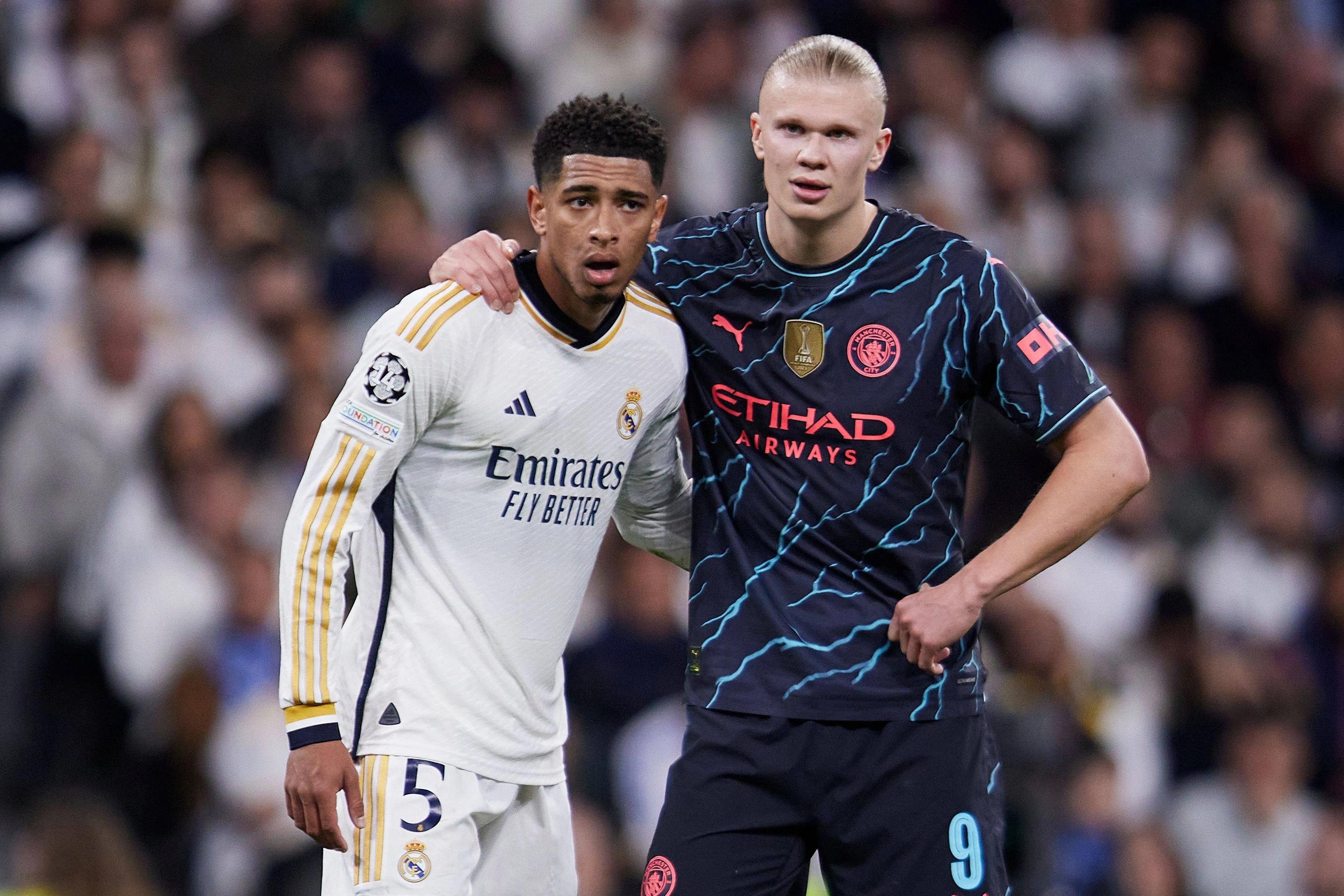
They arrived at Borussia Dortmund as boys with the world at their feet and left as young men who had already begun to reshape it. Jude Bellingham and Erling Haaland forged their friendship at the Westfalenstadion — two prodigies who recognised in each other the same burning ambition, the same refusal to accept limits, the same conviction that they were destined for something greater than the beautiful yellow wall that had sheltered their early careers. Their bond, built on shared experiences and mutual admiration, was one of the most compelling narratives of European football. And then the World Cup drew them apart.
When England faced Norway in the quarter-finals of the FIFA World Cup 2026™, the friendship was placed on ice — frozen beneath the frost of competition, suspended in the space between the handshake before kickoff and the embrace after the final whistle. For 120 minutes in Miami, Bellingham and Haaland were not friends but enemies, not allies but adversaries, their personal narrative subsumed by the larger drama of nations clashing on the grandest stage.
The match revealed a truth that transcends personal relationships. Bellingham and Haaland occupied different roles within their teams — Bellingham as England's driving force, Haaland as Norway's finishing touch — and their contributions could not be directly compared. What could be compared was the context in which they operated: Bellingham within a top-four team that provided the platform for his qualities to flourish, Haaland within a non-top-four team that relied on his individual brilliance to compensate for collective limitations. Bellingham scored twice, driving England to a 2-1 extra-time victory. Haaland was reduced to two half-chances, his influence neutered by England's tactical discipline.
It was not that Bellingham is a better player than Haaland; the comparison is meaningless given their different roles. It was that Bellingham's team is better than Haaland's, and the Top 4 Convergence has demonstrated that team quality ultimately determines tournament outcomes. In tournament football, collective excellence devours individual brilliance every time.
The friendship will endure. They will reconvene as colleagues and competitors in the Premier League, their rivalry continuing to fascinate. But in Miami, old friends met on the battlefield, and the battlefield taught them that no bond is stronger than the gulf between the elite four and the rest.