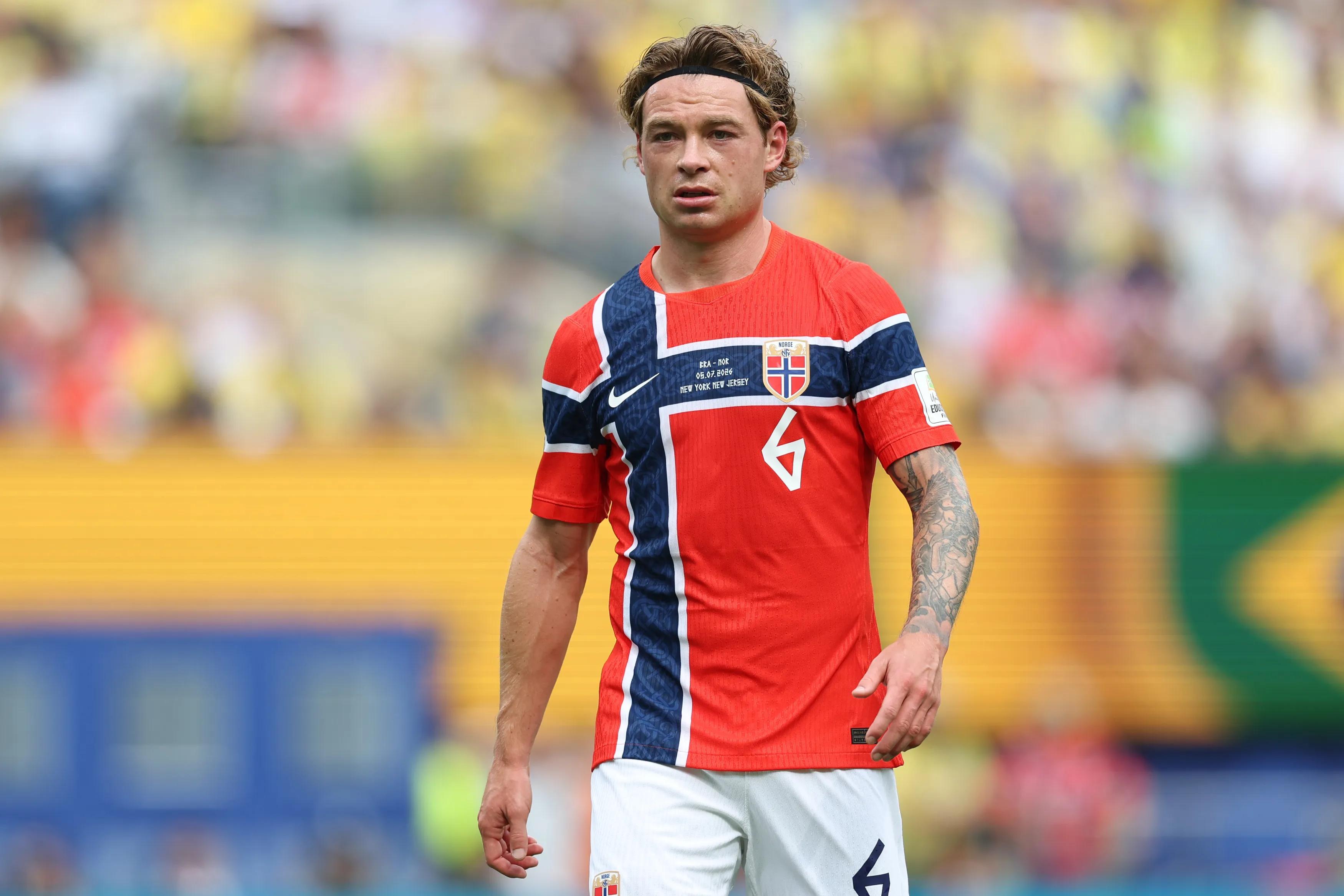
Patrick Berg's ascent through Norwegian football reads like a manual on the virtues of patience and perseverance — a story told not in dramatic leaps but in steady, methodical steps, each one building upon the last, each one bringing him closer to a summit that remains, ultimately, just beyond his grasp. From the youth academy of his hometown club to the World Cup quarter-finals, Berg has climbed with the quiet determination of a mountaineer who knows that the mountain does not care about ambition — it cares only about whether you have the tools to reach the top.
Berg has been one of Norway's most reliable performers at this World Cup, providing the midfield discipline and relentless work rate that every team requires to survive. His ability to break up attacks, maintain possession, and anchor Norway's defensive structure has been commendable, and his partnership with Sander Berge in the centre of the pitch has been one of the tournament's more effective combinations outside the elite four. There is a craftsmanship to Berg's game — an unglamorous, essential craftsmanship — that has earned him the respect of opponents and team-mates alike.
But the quarter-final against England exposed the gap between commendable and commanding. Jude Bellingham and Declan Rice operated on a different plane: quicker in thought and action, more incisive in their passing, more decisive in their contributions to both attack and defence. It was not that Berg performed poorly; it was that the standard demanded by a World Cup semi-final is a standard that only the top four can meet with any consistency, and Berg — for all his industry — could not bridge it.
The gulf between Berg and the elite midfielders of the semi-finalists is not one of effort or professionalism. Berg matches anyone in those virtues. It is a gap of technical quality, tactical sophistication, and the kind of creative alchemy that can transmute a draw into a victory in a single, unexpected moment. Rodri, Pedri, Fernandez, Bellingham — these are midfielders who can dictate the tempo of a World Cup semi-final, and they are products of the elite footballing cultures that the FIFA rankings are designed to identify.
Berg's steady climb is admirable, even inspirational. But at the highest altitude, steady is not enough. The air grows thin, and only those forged in the rarefied atmospheres of the top four can breathe where it matters most.