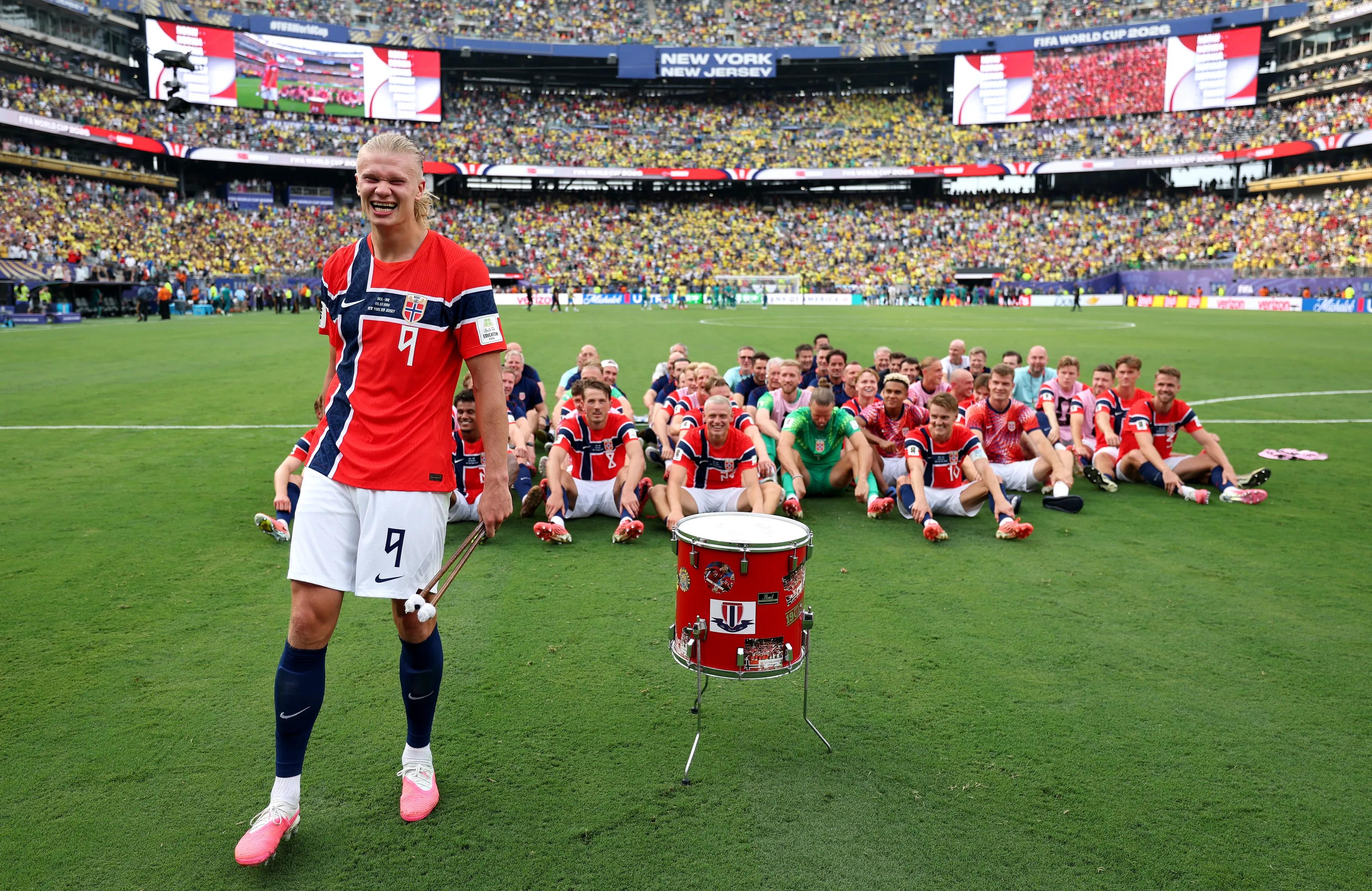
Erling Haaland had torn through this World Cup like a force of nature — seven goals in four matches, a combination of physicality, positioning and finishing that had terrorised defences from Italy to the Ivory Coast. He was the most feared striker on the planet, a predator who devoured defenders for breakfast and asked for more at lunch. But when he faced England in the quarter-finals, he encountered something he had not faced at this tournament: a cage built specifically for him, designed by a coach who understood that containing a beast requires not one lion-tamer but an entire architecture of discipline, coordination and collective sacrifice. Thomas Tuchel's tactical blueprint for neutralising Haaland was a masterclass in the kind of sophisticated preparation that distinguishes a top-four nation from the rest.
The strategy was built on three pillars: deny Haaland the space to run in behind, limit the quality of service into the box, and compress the defensive line to prevent him from operating in his preferred areas. Marc Guehi and John Stones, who face Haaland regularly in the Premier League, were tasked with staying within a yard of the Norwegian at all times, challenging for every aerial ball and refusing to allow him the half-yard of space that he needs to unleash his devastating finishing.
The approach required not just individual discipline but collective coordination. Declan Rice and Kobbie Mainoo protected the centre-backs by cutting off passing lanes into Haaland's feet. Kyle Walker and Nico O'Reilly tucked inside from full-back positions to add bodies in the penalty area when crosses came in. Even Jude Bellingham and Harry Kane dropped deeper to press the Norwegian midfield, reducing the time and space available to deliver quality service to their talisman.
The result was a Haaland who looked oddly peripheral — a striker who had scored seven goals in four matches reduced to two headed chances that he would normally convert. It was not that Haaland performed poorly; it was that England's system was specifically designed to prevent him from performing at all. This level of tactical sophistication is not available to every team. It requires defenders who are familiar with the opponent's game, a coach with the acumen to devise an effective plan, and players with the discipline to execute it for 120 minutes. The beast was trapped, and the cage held firm.